What Sells on Etsy in 3D Printing: Profitable Niches and Product Ideas (2026)
The 3D printed products that actually sell on Etsy in 2026, the niches with the best margins, what to avoid, and how to price them so you keep the profit.
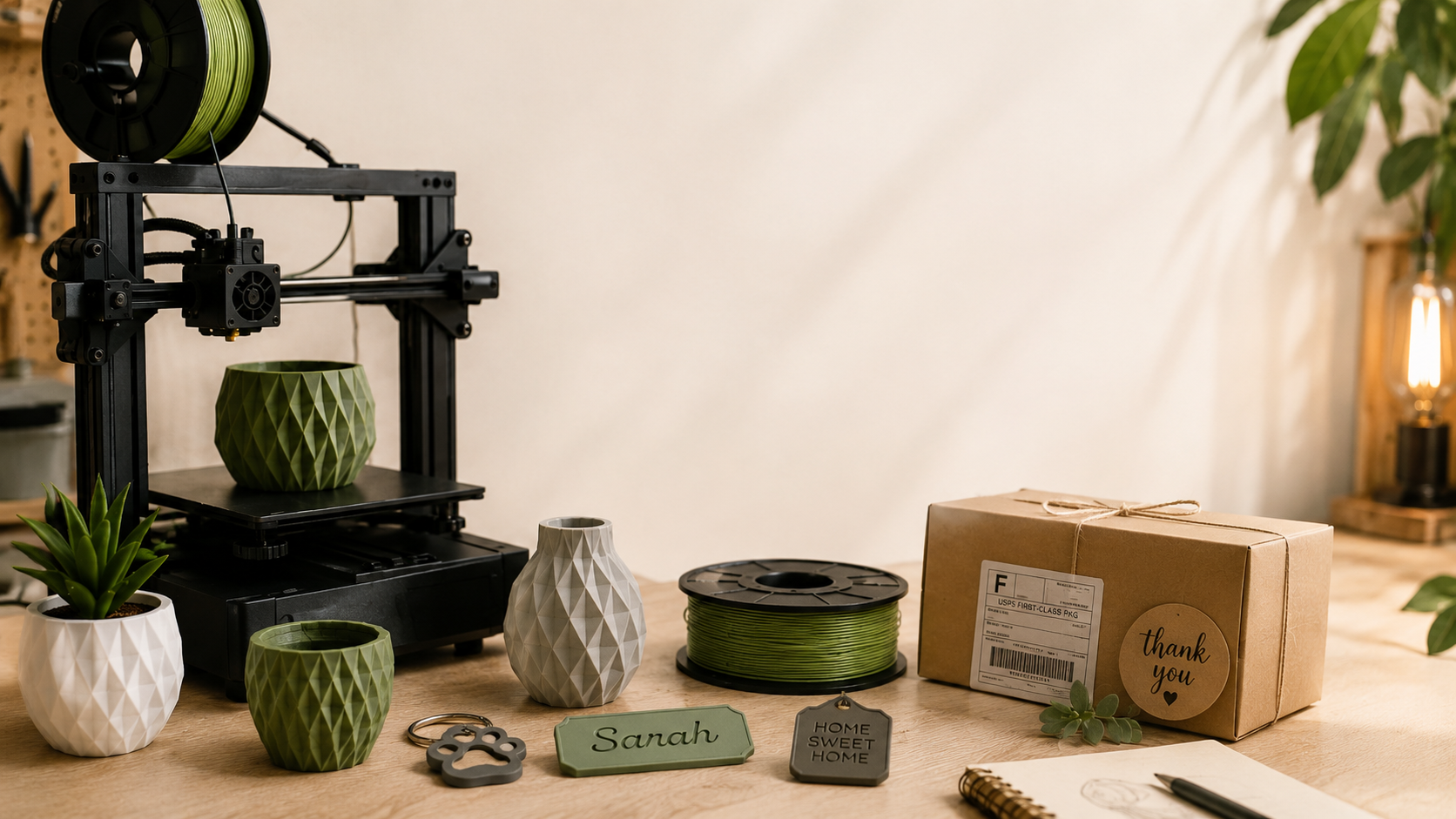
3D printing and Etsy are a natural fit. You make to order, so you carry almost no inventory, you can personalise nearly anything, and a spool of filament that costs a few currency units can turn into dozens of products that each sell for far more. Buyers on Etsy actively reward the things 3D printing is good at: customisation, niche designs, and items they cannot find in a normal shop.
The catch is that "I have a printer" is not a business. Success comes down to three things: picking a niche people actually search for, staying on the right side of copyright, and pricing so you keep the margin instead of giving it away. This guide covers all three, starting with the products that sell.
What makes a 3D printed product sell
Before the niche list, here is the pattern that the best sellers share. Look for products that tick most of these boxes:
- Low material cost, high perceived value. A small item using 0.50 to 3 worth of filament that sells for 12 to 40 is the sweet spot. The best categories run 60 to 85 percent margins.
- Personalisation. A name, a date, a colour choice, a custom shape. Personalised items command a premium and are nearly impossible for a factory to undercut.
- Solves a problem or makes a gift. Useful items get bought repeatedly; giftable items spike around occasions and holidays.
- Hard to find elsewhere. If a buyer can get it on Amazon for less, you are in a price war you will lose. Uniqueness is your moat.
- Prints reliably and ships cheap. Fast prints with low failure rates and a small, light, sturdy shape protect both your margin and your reviews.
Hold any product idea up against that list. If it fails most of them, keep looking.
The profitable niches in 2026
Tabletop gaming miniatures and terrain
The tabletop RPG community is huge and constantly hungry for new figures, scenery and accessories. Collectors and players pay well for detailed, characterful pieces, and the niche rewards a distinct style. Sell original miniatures, modular terrain, dice towers and trays, and storage. Resin gives the finest detail, but high-resolution FDM sells too, especially terrain. Use only models you designed or have a commercial licence for.
Articulated and print-in-place toys
Flexi dragons, articulated slugs, fidget toys and other print-in-place models have been a runaway category and still sell hard. They print in one piece with no assembly, come off the bed moving, and photograph beautifully, which is perfect for Etsy. Multi-colour versions and unusual creatures stand out. Margins are excellent because they are quick and cheap to print.
Personalised jewelry and accessories
Low material cost, high perceived value, and endless personalisation make jewelry one of the most profitable categories. Think pendants, earrings, hair accessories and custom charms. Original geometric and organic designs do well, and a name or initial turns a generic piece into a custom order at a higher price.
Desk, tech and cable organisation
Remote workers and gadget owners buy small problem-solvers constantly: cable clips, headphone and controller stands, charger docks, pen and desk organisers, and monitor-mount accessories. These are cheap to make, useful, and easy to bundle. Add a name or logo for the corporate-gift angle.
Home decor and wall art
Decorative pieces carry style-driven pricing: self-watering and geometric planters, vases (printed in vase mode, which is fast and low-material), lithophanes made from a customer's photo, wall art, and seasonal decorations. Lithophanes in particular are a strong personalised gift because each one is unique to the buyer.
Personalised gifts, nameplates and signs
Anything with a name on it sells: door and desk nameplates, kids' room signs, business signage, wedding and event decor, and custom keychains. This is giftable, personalised and seasonal all at once, which means repeat demand around birthdays, weddings and holidays.
Cookie cutters and craft tools
Custom cookie cutters are a perennial seller, simple to design, quick to print, and spiking around Christmas, Halloween and weddings. Logos, names and custom shapes let you charge for bespoke work. The wider "tools for other crafts" angle (clay tools, stencils, jigs) is underrated.
Pet accessories
A loyal, free-spending audience. Personalised pet tags, bowl stands, toy holders, and custom name signs all do well. The personalisation angle (the pet's name) is built in.
Cosplay props and accessories
Cosplayers want detailed pieces they cannot buy in stores and will pay for quality and complexity. Original props, armour parts, badges and accessories sell at higher prices. Offering finishing or painting raises the ticket further. Keep strictly to original or licensed designs, since this niche is full of IP traps.
Replacement parts and problem-solvers
One of the most underrated niches. People constantly search for small replacement parts that manufacturers no longer make: knobs, clips, brackets, mounts and adapters. Loyal customers, little competition, and clear value because you are solving a real and specific problem.
What to avoid
The fastest ways to get a shop suspended or stuck in a price war:
- Copyrighted characters and brands. Printing Pokemon, Marvel, Disney, game characters or branded logos without a licence is infringement, and Etsy removes listings and shops over it. Stick to original designs or properly licensed ones.
- Unlicensed STL files. Downloading a model and selling prints of it is not allowed unless the licence explicitly permits commercial use. Always check the licence, and keep proof. (A future guide will cover commercial model licensing in detail.)
- Generic, undifferentiated designs. If dozens of sellers list the same free model with the same photos, you are competing only on price. Avoid it.
- Fragile, return-prone items. Thin, delicate prints that arrive broken cost you refunds and reviews. Design for sturdiness and ship well.
How to validate a niche before you print
Do not guess. Spend an hour validating before you buy filament for a new product line:
- Search the idea in Etsy's own search bar and read the autocomplete suggestions. Those are real buyer queries.
- Use a keyword tool like eRank or Marmalead to check search volume and competition.
- Study the top-selling competitor shops. What do they charge, how do they photograph, and where are the gaps in their reviews? Gaps are your opening.
- Test a small batch first. Track which items get favourited and which sell quickly, then double down on the winners and drop the rest.
Good photos deserve a special mention: on Etsy your photos are your storefront, and a clean, well-lit, professional shot is often the difference between a scroll-past and a sale.
Then price it so you keep the profit
Finding a product people want is only half the job. The other half is pricing it so the sale is actually worth making. This is where most new sellers quietly lose money: they weigh the filament, multiply by some number, and forget the electricity, the wear on the machine, the failed prints, and above all their own time spent slicing, post-processing and packing.
The fix is to price from real costs. Material plus electricity plus machine wear plus labour gives your true cost; a failure buffer covers the prints that never reach a customer; and a deliberate margin on top is your profit. The personalisation premium that Etsy rewards sits in that margin, not in the material. Always set a minimum order price too, because a tiny keychain still costs you setup, handling and packing time.
Our full guide on how to price 3D prints walks through the exact formula with a worked example. Get this right and the "60 to 85 percent margin" those top categories are known for becomes real money rather than a number on a blog.
A quick note on material: the right filament is a selling point as well as a cost. Durable PETG for functional and outdoor items, easy PLA for decor and toys, flexible TPU for grippy parts. Our filament guide covers which to use for what. {{AFFILIATE: starter filament bundle}}
Start small, price right, scale the winners
You do not need a print farm to start. One reliable machine, a handful of original or licensed designs in a niche you understand, honest pricing, and good photos is a real shop. Validate before you print, avoid the copyright traps, lean into personalisation, and let the products that sell tell you where to expand.