Prusa Core One+ Review: The Enclosed CoreXY That Finally Gets It Right
Prusa's first enclosed CoreXY: reliable, future-proof, and refreshingly open — if you can accept the premium price and the odd belt-tuning session.
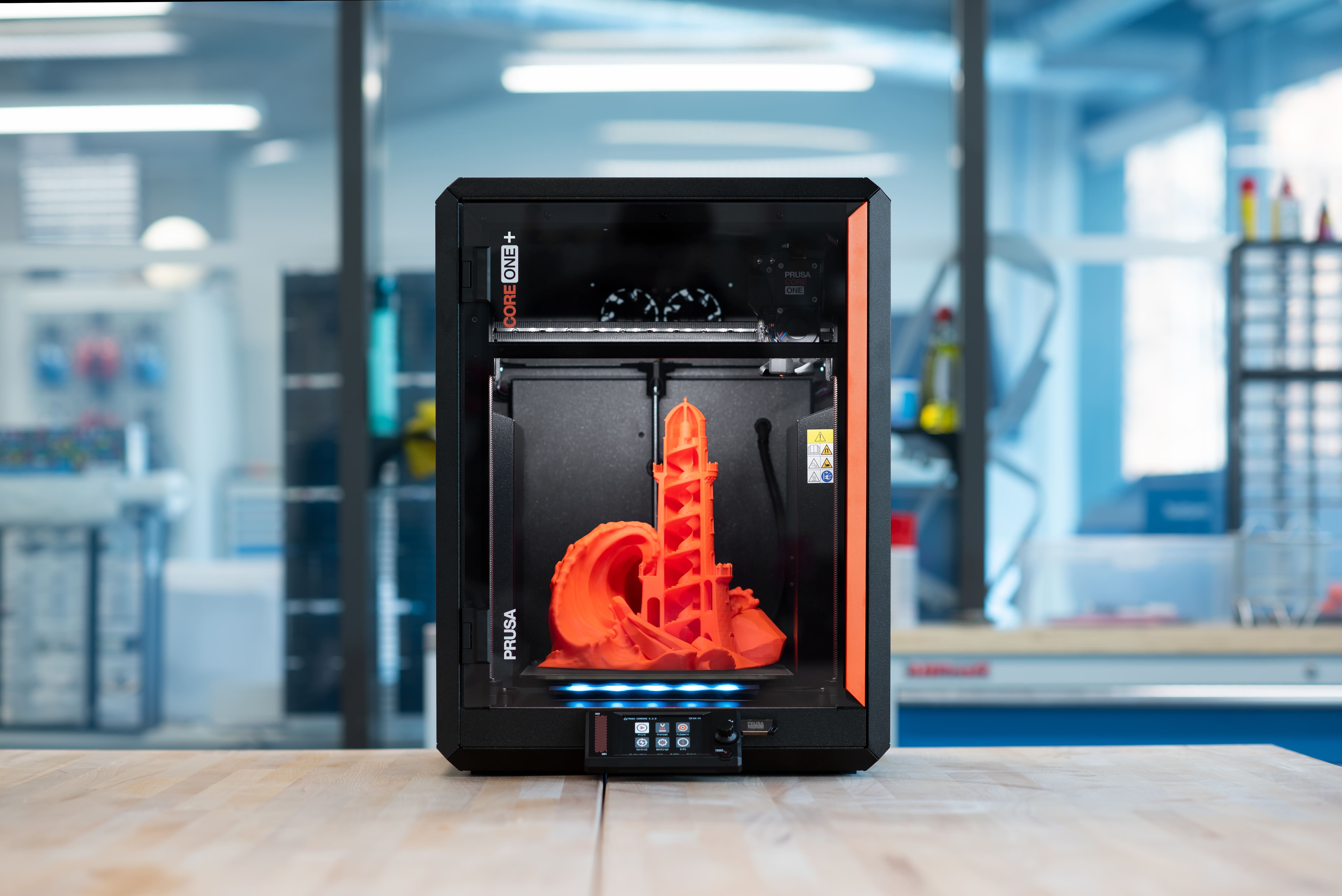
If you've been waiting for a printer you can start and simply walk away from, one that quietly turns out flawless parts overnight, handles ABS and nylon without a fight, and won't lock you into someone else's walled garden, the Prusa Core One is that printer. Reviewers have put it through a first week, three months, a full year, and 800+ hours across 18 kg of filament, and they keep landing in the same place: this is the reliable, future-proof CoreXY workhorse Prusa fans have been asking for.
Here's why it earns a spot on your desk, plus the honest caveats, so you buy with your eyes open.
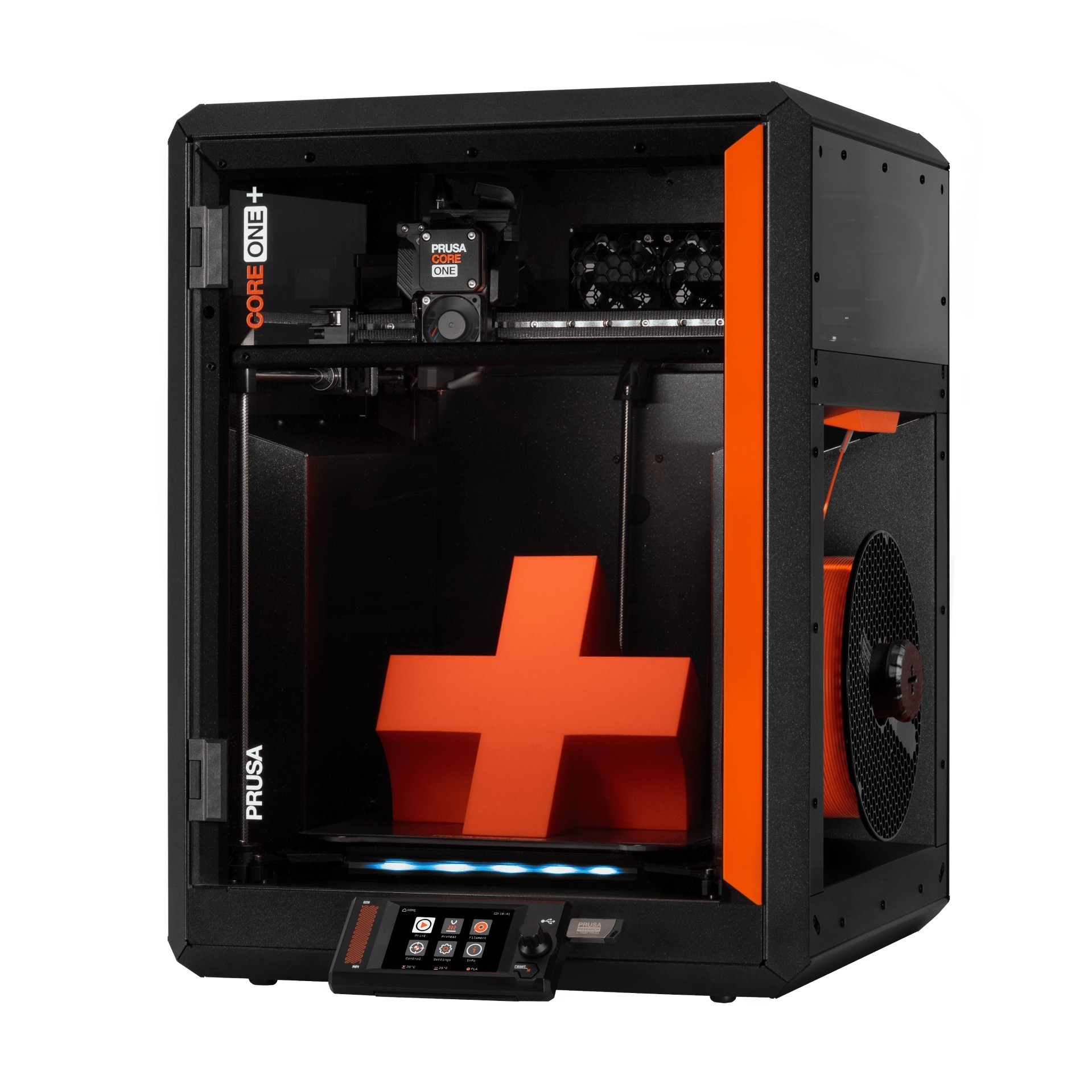
Prusa Research CORE One+
Prints so clean your friends will think you bought them
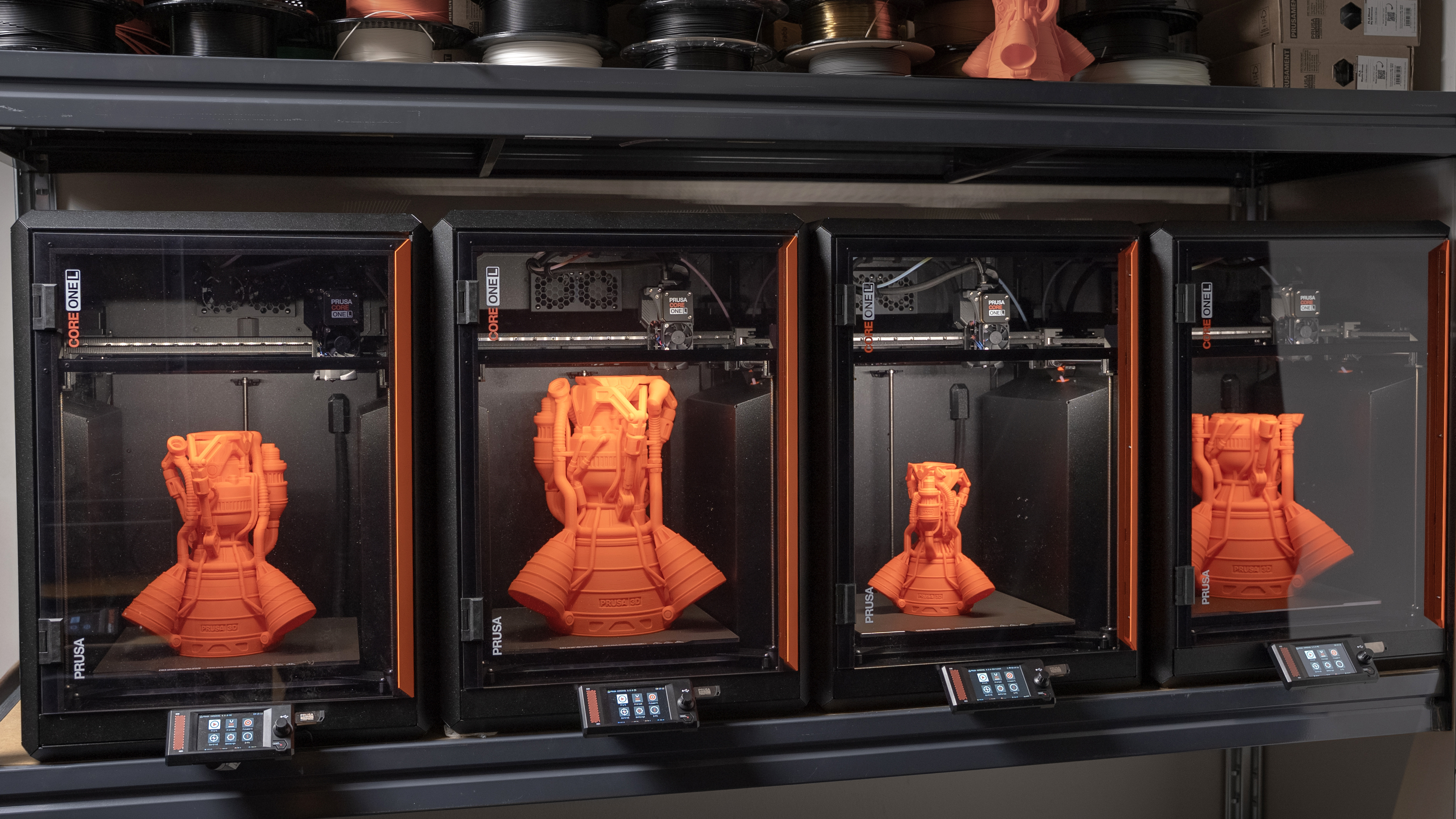
Load a spool, hit print, walk away. The Core One ships with factory-tuned profiles (temperature, retraction, flow, pressure advance, all dialed in) so your very first print looks like something a seasoned maker spent a weekend tuning. Tolerance tests come back near-perfect (clean 0.05 mm clearances), and reviewers reach for one word again and again: flawless.
It's fast, too. Faster than the MK4S, and trading blows with the Bambu X1C on print times, but with better temperature control, so your parts come out consistently glossy and strong instead of patchy. And it does all this at around 50 dB fully enclosed, one of the quietest machines tested. Quiet enough to run in the same room you work in.
Materials that used to be a nightmare, now push-button
This is where the Core One quietly pulls ahead. Its enclosed steel-and-polycarbonate chamber, warmed by the heated bed and managed by dual exhaust fans, means ABS, ASA, polycarbonate and nylon just work. The printer pre-heats and heat-soaks the chamber automatically before it starts, so the materials that most people gave up on because they were "too much hassle" become a genuine option again.
In a head-to-head, the Core One produced the most accurate ABS parts against both the X1C and Prusa's own flagship XL. That's real engineering capability, out of the box, for the price of a mid-range machine.
The upgrade that keeps paying off
Buying a Prusa isn't buying a gadget you'll resell in a year, it's buying into an ecosystem that keeps getting better after you pay:
- Remote everything. Prusa Connect lets you queue prints days ahead, watch the camera, and start jobs from your phone, then get a notification when they're done. Most owners check the printer only once, to peel off a finished part.
- It's yours. Full offline printing over USB or Ethernet, a removable Wi-Fi module, and, crucially, Prusa guarantees you can flash any firmware you want and keep your warranty. No authorization locks, no risk of a firmware update bricking your workflow.
- Support that actually shows up. Fast answers in minutes-to-hours, easy repairs, and a track record that speaks for itself: the 2017 MK3 still gets firmware updates today. That longevity is also why used Prusas hold their value.
For a lot of buyers, that combination (open, repairable, EU-built, no data routed through overseas servers) is exactly what justifies paying a bit more than the cheapest option on the shelf.
Yes, there are trade-offs: here's why they won't stop you
An honest review names the rough edges. The good news: every one of them is either fixed, avoidable, or minor.
- The "VFA" surface-pattern chatter. Early units showed fine belt-induced artifacts, and it lit up Reddit. But Prusa has been shipping belt-tuning updates ever since, and reviewers on 6-month and 1-year-old machines report essentially none. Print matte filament (most people do) and you'll likely never see it. A periodic belt-tune, a two-minute job, keeps it away.
- Nozzle and filtration are add-ons. It ships with a brass nozzle; abrasive materials want a hardened one, and ABS/ASA want the filtration kit. Budget a little extra if that's your use case, and skip it entirely if you mostly print PLA and PETG.
- Multicolor isn't its strong suit yet. The MMU3 works but wants attention. If single-color covers 90% of what you print (it does for most people), this simply won't matter.
- A few early firmware quirks. Prusa iterates fast and has been ironing them out, which is exactly why now, a few firmware cycles past launch, is the sweet spot to buy.
None of these are dealbreakers. They're the short list you shrug at once the machine is quietly printing part after part.
What the "+" adds
The Core One+ builds on the base machine with an automatic top-vent grille (no more manual flap for PLA vs. ABS), a filament sensor that handles flexibles better, and a spool holder ready for Prusa's dry box. Convenience upgrades that make an already low-effort printer even more hands-off.
The bottom line: should you buy it?
If you want a printer that just works, reliable enough to trust overnight, capable enough for real engineering materials, quiet enough to live with, and open enough that you'll still control it in five years, the Prusa Core One+ is one of the easiest recommendations in 3D printing right now. It effectively makes the beloved MK4S obsolete (it's actually a touch cheaper with the enclosure, and better in every way), and it's a better buy today than at launch.
Stop babysitting temperamental machines. Get one that earns its keep, print after print.