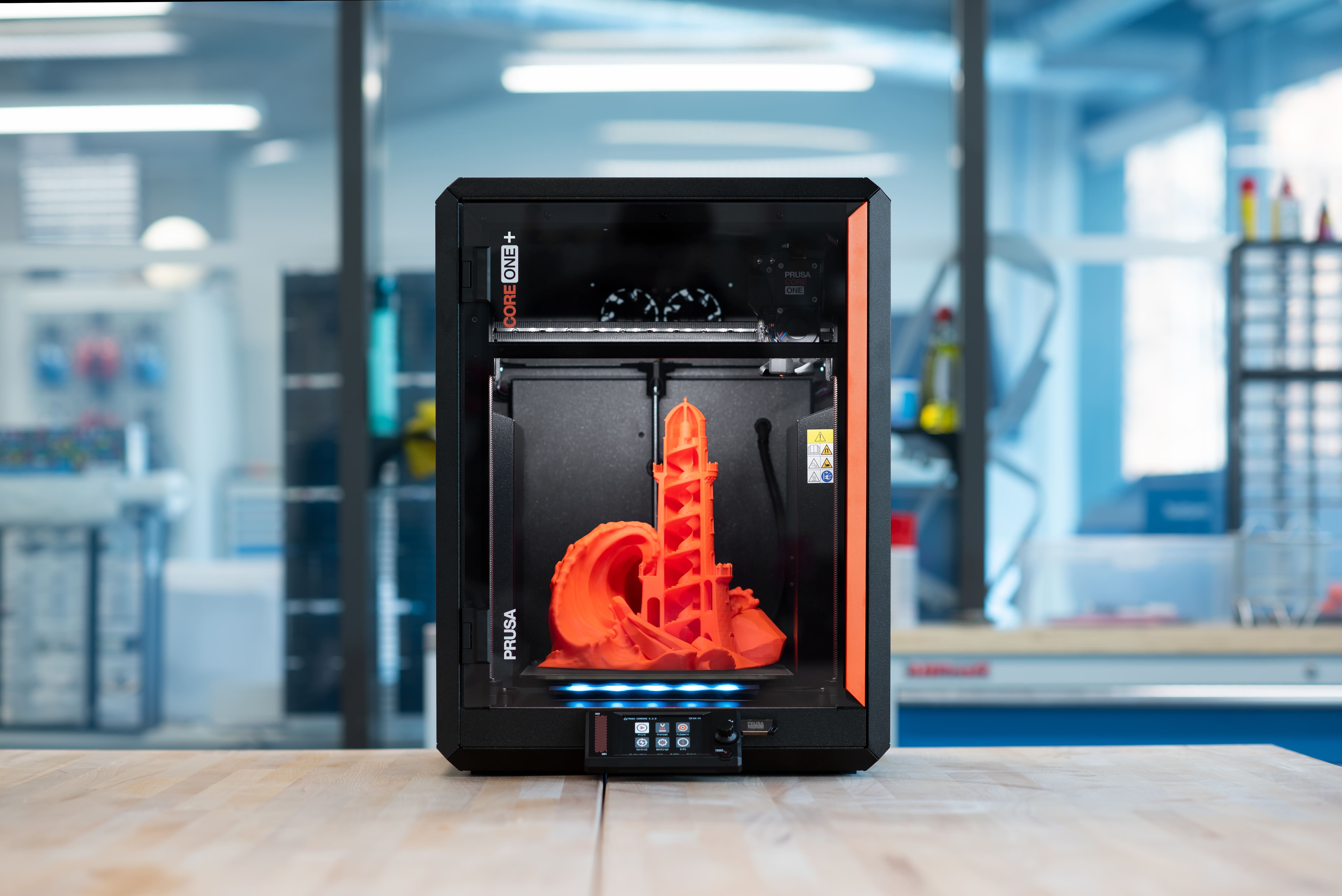
The Prusa Lineup in 2026: Which Machine for Which Job
A practical tour of the 2026 Prusa range, from the MINI+ to the XL and the industrial Pro HT90, plus a quick look at Prusament filament and who each machine is for.
Prusa Research built its name on machines that are reliable, open-source, and endlessly upgradeable, all designed and made in the EU. That reputation matters when you print for customers: a printer that "just works" is a printer that does not eat your margin in failed jobs and reprints.
The 2026 range has grown well beyond the classic bed-slinger. It now spans six machines, from a small entry model to a five-tool changer and an industrial high-temperature unit. This guide walks the lineup the practical way: what each machine is, what it prints, and who it is actually for. There is a quick comparison first, then a small section on Prusament, Prusa's own filament.
The lineup at a glance
| MINI+ | MK4S | CORE One+ | XL | |
|---|---|---|---|---|
| Type | Open frame | Open frame (bed-slinger) | Enclosed CoreXY | Tool-changer (up to 5 heads) |
| Build volume | 180 × 180 × 180 mm | 250 × 210 × 220 mm | 250 × 220 × 270 mm | 360 × 360 × 360 mm |
| Enclosure | Optional bundle | Optional | Built in, heated chamber | Optional |
| Materials | PLA, PETG, TPU | PLA, PETG, TPU (ABS/ASA with enclosure) | PLA, PETG, ABS, ASA, PC, nylon | Full range, multi-material |
| Multi-material | No | MMU3 add-on | MMU3 add-on | Native, true multi-color/material |
| Best for | First printer, small parts | Everyday workhorse | Engineering materials, speed | Big parts and serious multi-material |
Two machines sit above this table in the professional tier: the CORE One L (a larger enclosed CoreXY) and the Pro HT90 (an industrial delta for super-polymers). Both are covered below.
To scale, nested.
Each box is a printer's real build volume, sharing one corner. Slide to grow through them — drag to orbit.
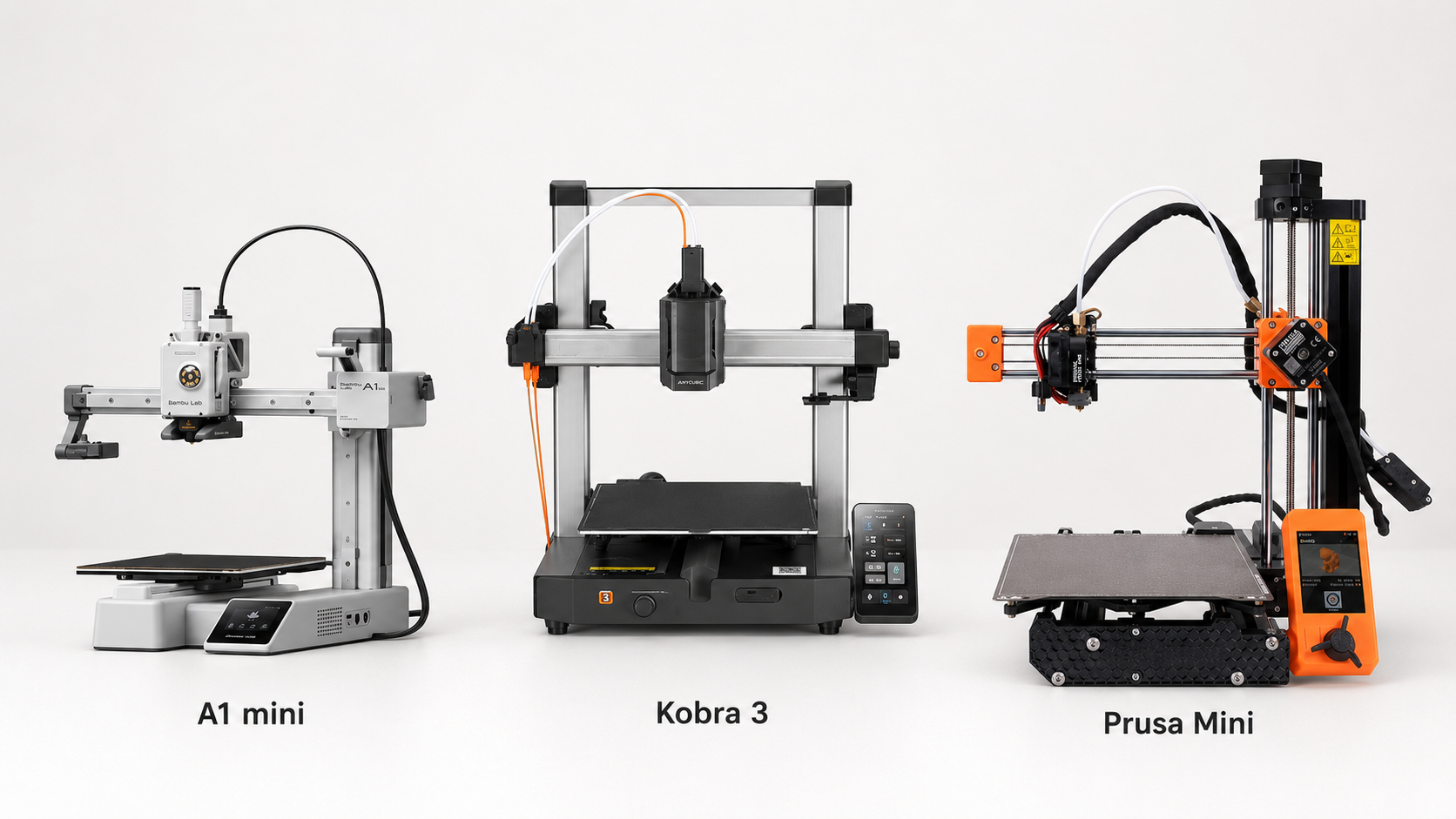
Original Prusa MINI+: the way in
The MINI+ is Prusa's most affordable machine and a common "first printer" recommendation. The build volume is 180 mm in every direction, the nozzle reaches 280 °C and the bed 100 °C, so it handles PLA, PETG and TPU comfortably, with an enclosure bundle available for more demanding materials.
It launched back in 2021 and has not had a major hardware refresh since, so it shows its age against newer sub-500 machines on speed. But it still runs the same PrusaSlicer ecosystem as everything else in the range and benefits from firmware features like Input Shaper. For a print shop, a MINI+ is a useful second or third machine for small jobs and to keep the big printers free for the work that pays.
Approximate price (mid-2026): Prusa's entry tier, well below the MK4S. Check current pricing.
Prusa Research MINI+
Original Prusa MK4S: the everyday workhorse
The MK4S is Prusa's most popular machine and, for most makers, the right default. It is an open-frame bed-slinger with a 250 × 210 × 220 mm build volume and the Nextruder direct-drive extruder, which has a load cell that does automatic first-layer calibration using the nozzle itself as the sensor. The 2025 "S" update added a high-flow CHT nozzle and 360 degree part cooling, pushing volumetric flow to around 24 mm³/s, so it is genuinely quick while staying open and easy to maintain.
It is not the fastest printer you can buy, but it is one of the most dependable, with excellent documentation and support. Add the enclosure for ABS and ASA, or the MMU3 for up to five-material printing. For a business, this is the "set it and forget it" machine you build a fleet around.
Approximate price (mid-2026): around $999 / €999 assembled, around $729 as a kit, after a permanent price drop in late 2025.
Prusa Research MK4S
Prusa CORE One+: enclosed, faster, engineering-ready
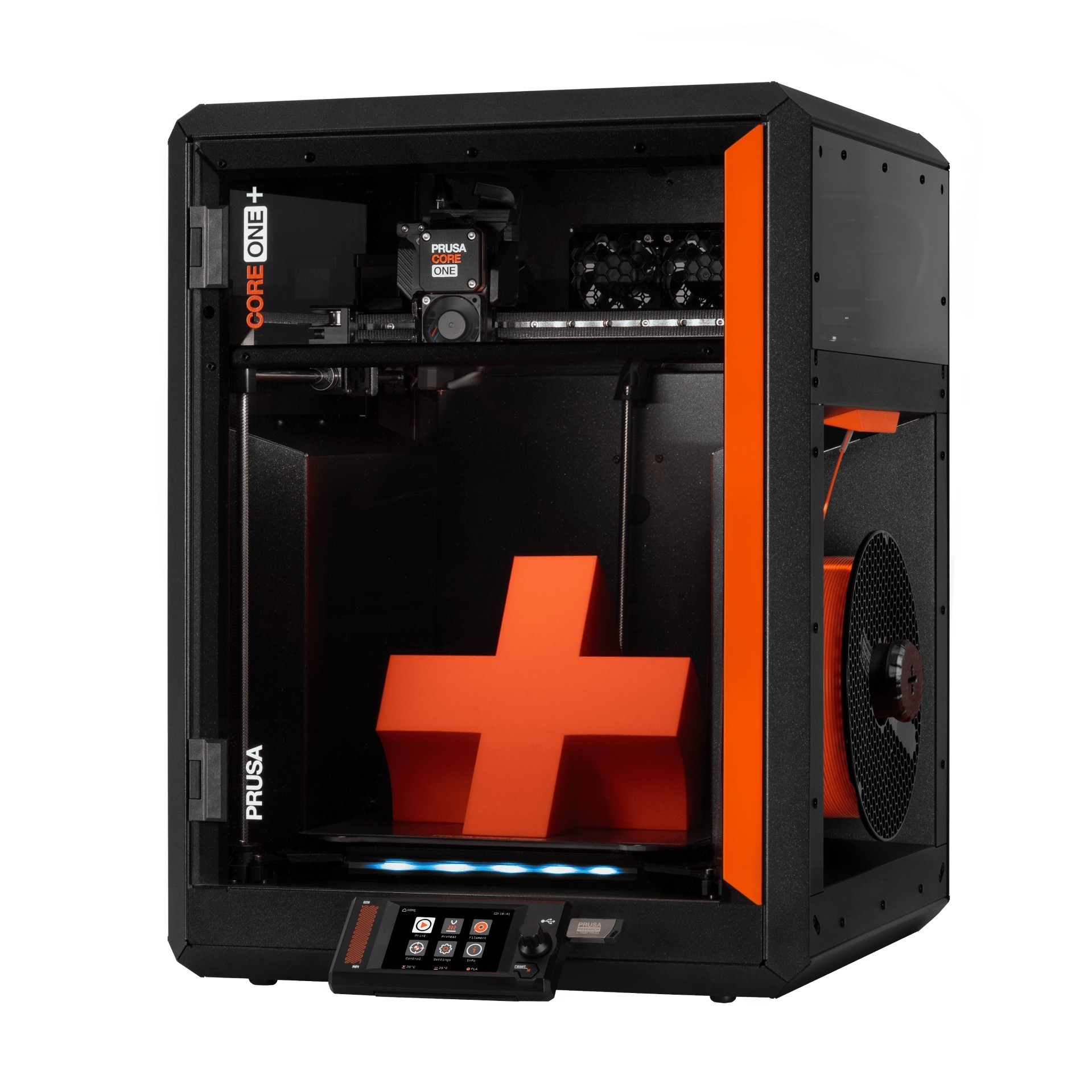
The CORE One+ is Prusa's fully enclosed CoreXY machine and the natural step up when you need ABS, ASA, PC or nylon. The enclosure has an actively managed chamber that can be heated for engineering filaments or kept cool enough for PLA, and the door sensor pauses the print if it is opened, which is a real plus around children, schools and pets.
It prints roughly 15 to 20 percent faster than the MK4S, with CoreXY travel speeds up to around 600 mm/s, and it gives you a bit more Z height (250 × 220 × 270 mm) while taking up less space than an enclosed MK4S. It supports the MMU3 for multi-material and the HT Hotend upgrade for 400 °C printing of high-performance polymers. If you already own an MK4S, there is a conversion kit rather than buying a whole new machine, which is very on-brand for Prusa.
Approximate price (mid-2026): around $1,199 assembled, around $949 as a kit, with an MK4S conversion kit around $449. Verify current pricing.
Prusa Research CORE One+
Original Prusa XL: big parts and true multi-material
The XL is the flagship and a category of its own. Its headline feature is a tool changer with up to five independent toolheads, so multi-color and multi-material prints happen without the purge waste that single-nozzle systems generate. The 360 mm cubed build volume is huge, opening up large single-piece parts that the rest of the range cannot fit.
For a print business this is the machine for two specific situations: parts too big for the MK4S or CORE One, and multi-material jobs where the zero-waste tool changer pays for itself over time. It is a premium purchase, and Prusa applied a 2026 price drop of up to $200 across the XL line. There are single-toolhead and multi-toolhead versions, so you can start smaller and add heads later.
Approximate price (mid-2026): premium tier, single-toolhead starting noticeably above the CORE One, multi-toolhead higher again. Check current pricing.
Prusa Research XL 5-toolhead
The professional tier: CORE One L, INDX and Pro HT90
Above the consumer range sit a few machines aimed at production and engineering:
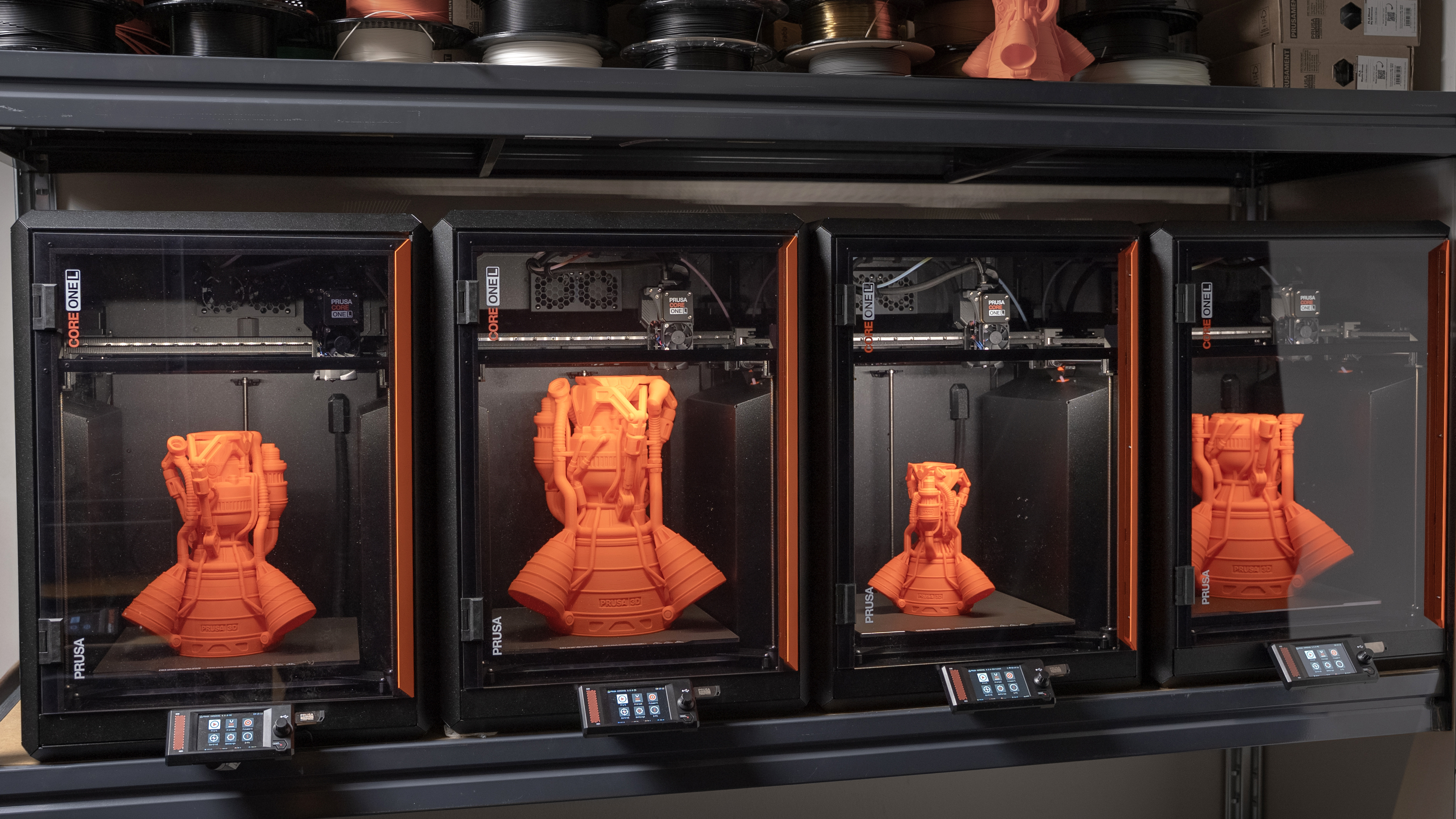
- CORE One L is a larger enclosed CoreXY for makers who want the CORE One experience with more build room.
- CORE One INDX is a tool-changer with up to eight nozzles, aimed at high-throughput multi-material work.
- Pro HT90 is the industrial one: a delta machine with a 500 °C nozzle and a 90 °C actively heated chamber, built for super-polymers like PEEK, PEKK and ULTEM as well as PA-CF and PC-CF. Its delta motion hits very high accelerations, and magnetically swappable print heads let you jump from a high-temp engineering material to fast PLA in seconds. It is desktop-sized but firmly a business tool, with offline workflows for defense, medical and R&D environments where IP cannot touch a network.
Most print shops will never need the HT90. But if a customer asks for genuinely heat-resistant or aerospace-grade parts, this is the Prusa that can quote them honestly.
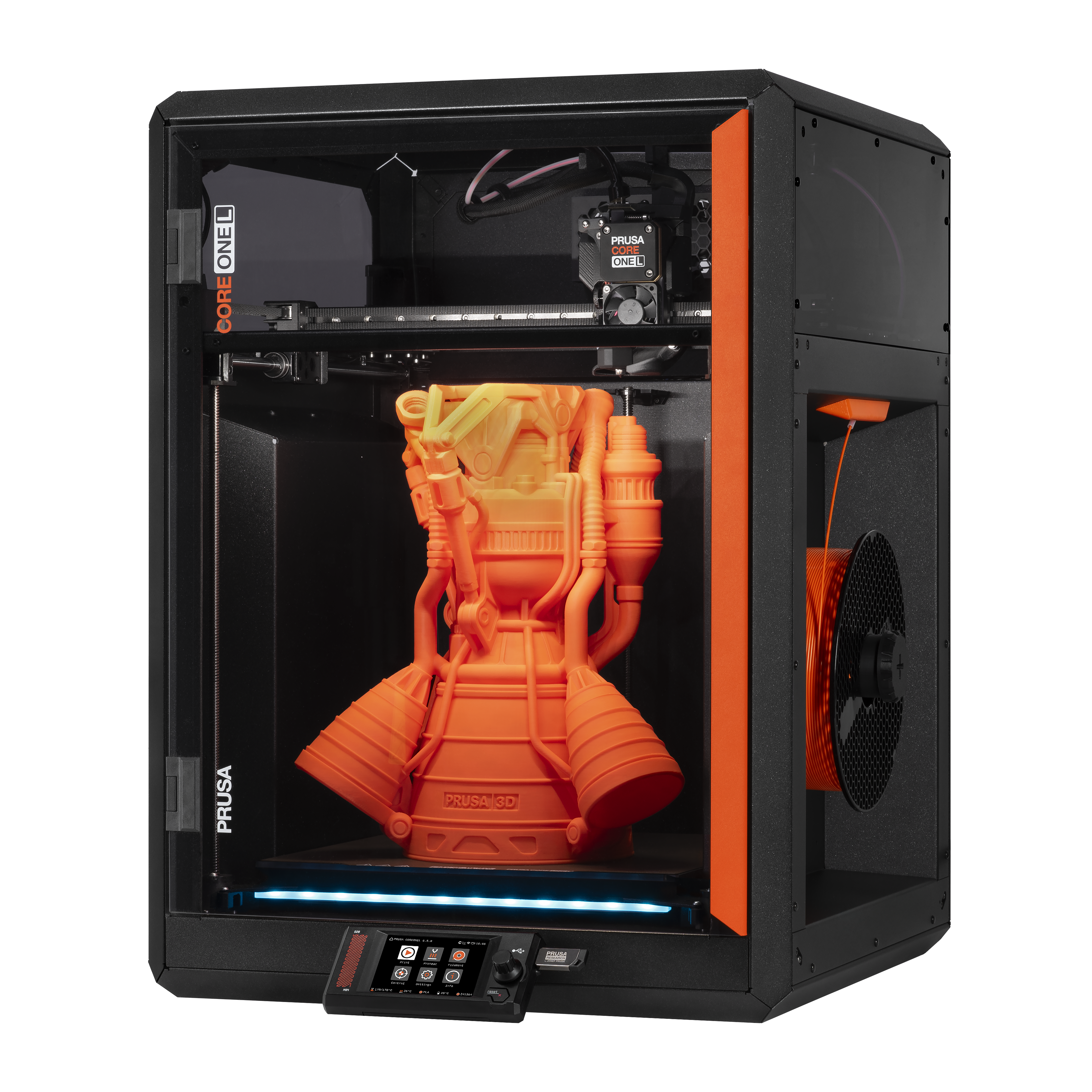
Prusa Research CORE One L
Prusa Research Pro HT90
A quick word on Prusament
Prusa also makes its own filament, Prusament, and it is worth a paragraph because it pairs naturally with the printers. Prusament is known for tight diameter tolerance, around plus or minus 0.02 mm, which is among the best on the market and means more consistent flow and fewer surface defects on long prints. Every spool ships with per-batch quality data you can look up by lot number, which is unusual transparency in this space.
The range covers the materials most jobs need: Prusament PLA for everyday and decorative work, PETG for tough functional parts, ASA for UV-stable outdoor parts, plus PC Blend, PVB (great for smoothing) and PA11 nylon for engineering work. It is made in the EU, so availability and shipping are easy if you are printing in Europe. If you want the lowest-risk filament for a Prusa machine, Prusament is the safe default, though plenty of makers happily mix in Polymaker, Overture or eSUN to manage cost. See our filament guide for the full material breakdown.
Which Prusa should you buy?
- Tight budget, small parts, or a first machine: MINI+.
- One machine to do almost everything, reliably: MK4S.
- You print ABS, ASA, PC or nylon, or want more speed in a quiet box: CORE One+.
- You need big parts or waste-free multi-material: XL.
- You print engineering or high-temperature polymers for paying clients: Pro HT90.
For most print businesses the sweet spot is one or two MK4S machines as the daily workhorses, a CORE One+ when engineering materials become regular orders, and an XL once large or multi-material jobs justify it.
Try it yourself
Whichever Prusa you run, its per-machine power draw and wear cost feed straight into an accurate quote. Drop your sliced G-code into the calculator and Quotruder prices the job in under a minute.